If you’re considering selling your home, you’re likely wondering about the potential costs involved. The total expense can vary based on factors like the offer you accept, whether you contribute to the buyer’s closing costs, the number of repairs you make, and other elements.
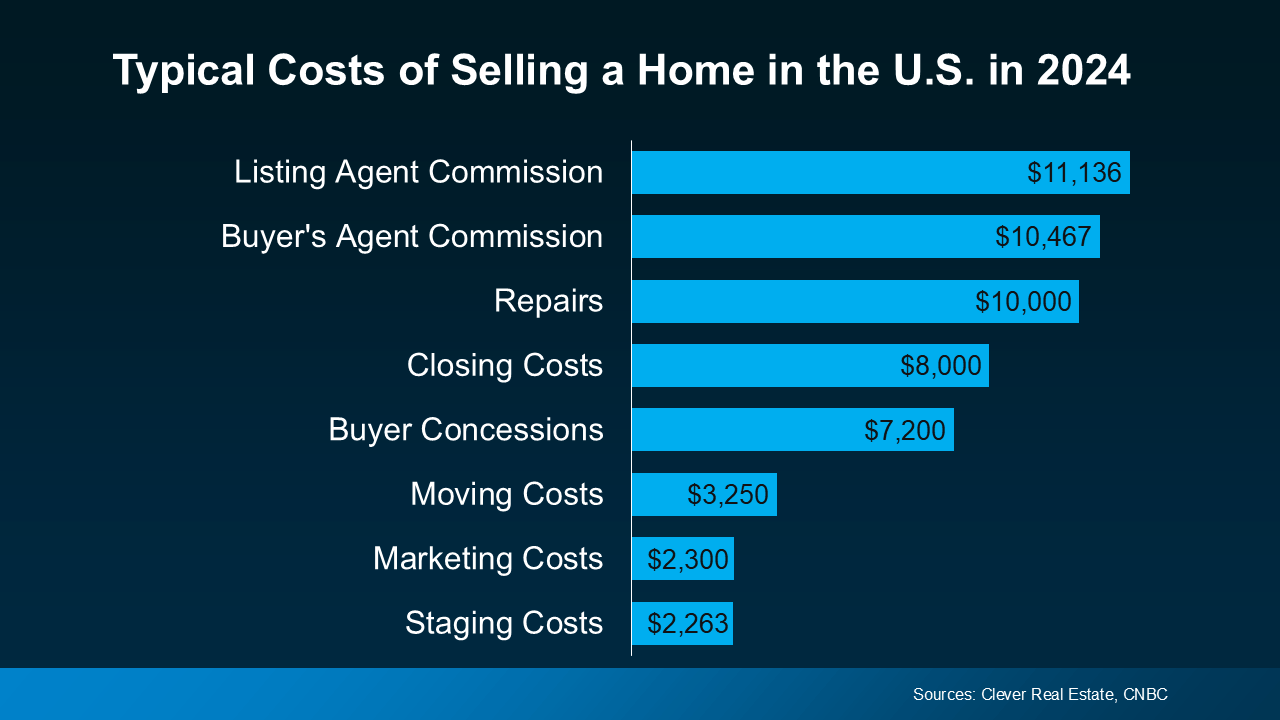
To give you a general idea of what to expect, here’s an overview of key expenses you should be prepared for (see graph below):
While these costs might seem significant, it's important to note that many homeowners today have built up considerable equity in their properties. This means that, even after covering these selling expenses, you’re likely to see substantial financial gains. You may even have enough remaining equity to put toward the purchase of your next home.
Let’s break down some of the costs shown in the graph to give you more insight into what they involve and where potential savings can be found.
Taxes will vary by state, and agent commissions are based on your agreement with your agent. Additionally, if you’ve been paying for items like property taxes or mortgage escrow as part of your mortgage, you might receive a credit at closing to offset some of these costs.
However, if you’d prefer to skip this step, your agent can offer guidance on essential updates like paint colors, minor repairs, and other details that can help you make strategic investments for a better return.
If you’d rather skip formal staging, your agent can advise you on simpler changes, such as removing excess furniture for better room flow, adding a rug for warmth, or taking down personal photos to create a more neutral space.
Beyond that, an agent’s value lies in crafting targeted marketing and pricing strategies that highlight your home’s best features and any updates you’ve made. This can lead to a higher sale price.
To give you a general idea of what to expect, here’s an overview of key expenses you should be prepared for (see graph below):
While these costs might seem significant, it's important to note that many homeowners today have built up considerable equity in their properties. This means that, even after covering these selling expenses, you’re likely to see substantial financial gains. You may even have enough remaining equity to put toward the purchase of your next home.
Let’s break down some of the costs shown in the graph to give you more insight into what they involve and where potential savings can be found.
Closing Costs and Commission
These are the expenses you’ll need to pay at closing to finalize the sale. They include your own closing costs and possibly a portion of the buyer’s costs if you offer that as a concession. As U.S. News Real Estate notes:“Closing costs are fees paid to complete the transaction and transfer home ownership to the buyer . . . Sellers can expect to pay 2% to 4% of the sale price in fees and taxes, on top of the agent commission. Based on the national median home sale price, closing costs in 2023 for sellers range from approximately $7,740 to $15,480. . .”
Taxes will vary by state, and agent commissions are based on your agreement with your agent. Additionally, if you’ve been paying for items like property taxes or mortgage escrow as part of your mortgage, you might receive a credit at closing to offset some of these costs.
Pre-Listing Inspection and Repairs
Some sellers opt for a pre-listing inspection to identify potential issues that could come up in the buyer’s inspection. This allows you to address repairs early, presenting your home in the best possible light from the start.However, if you’d prefer to skip this step, your agent can offer guidance on essential updates like paint colors, minor repairs, and other details that can help you make strategic investments for a better return.
Home Staging
As housing inventory increases, taking extra steps to make your home stand out can be beneficial. Staging, which can involve bringing in furniture for a vacant home or adding decorative items, helps your home show better. Some staging can even be done virtually for photos. According to Bankrate:“Home sellers typically spend between $782 and $2,817 on staging costs . . . although prices can vary widely.”
If you’d rather skip formal staging, your agent can advise you on simpler changes, such as removing excess furniture for better room flow, adding a rug for warmth, or taking down personal photos to create a more neutral space.
Why Working with an Agent Is Essential
If you’re looking to cut costs, there are areas where you can save, like opting out of staging or a pre-listing inspection. However, selling without professional help is not advisable. An experienced agent is your key resource throughout the process, providing personalized advice on staging and repairs, potentially saving you from hiring outside services.Beyond that, an agent’s value lies in crafting targeted marketing and pricing strategies that highlight your home’s best features and any updates you’ve made. This can lead to a higher sale price.
Bottom Line
Want a clearer picture of what to expect when selling your home? Let’s chat and walk through the process together.
We would like to hear from you! If you have any questions, please do not hesitate to contact us. We are always looking forward to hearing from you! We will do our best to reply to you within 24 hours !